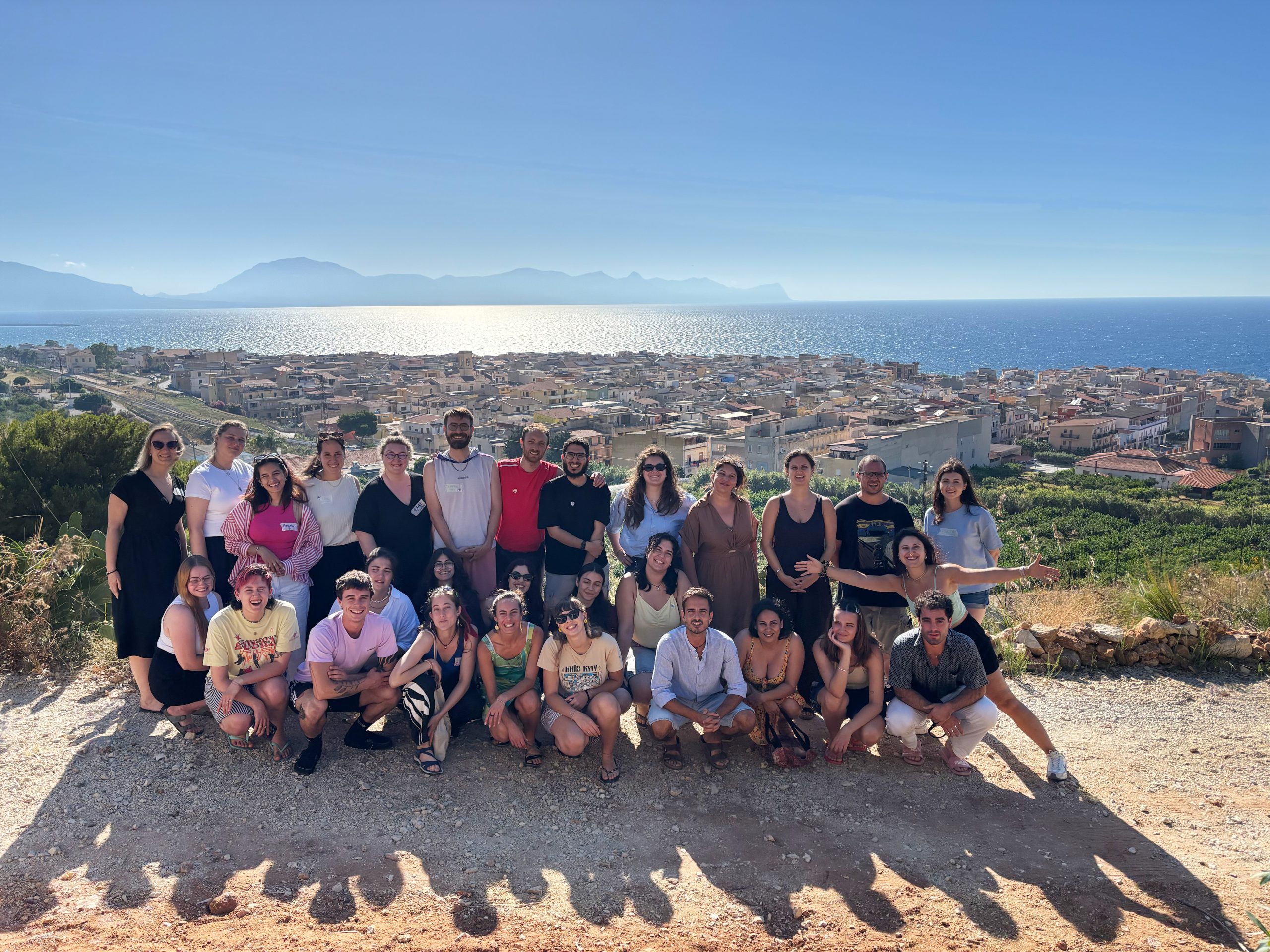
In today’s Europe, where youth participation in democratic life is becoming an increasingly urgent priority, the challenges linked to inclusion, representation, and meaningful dialogue between institutions and younger generations are more visible than ever. Young people with fewer opportunities, as well as migrants and refugees, continue to face significant barriers when trying to access decision-making spaces and structured forms of active citizenship. This reality highlights the need to rethink the tools, languages, and environments through which participation is encouraged. It is precisely within this context that PIVOT was created: a project designed to strengthen the capacity of young Europeans to engage in democratic life through more inclusive and conscious forms of participation.
Within this broader effort, the Final Conference held on 17 October at the Maison d’Europe in Paris played a particularly meaningful role. The event brought together the project’s main beneficiaries — young people from diverse backgrounds who often face limited opportunities — alongside youth organisations, public institutions and civil-society representatives from several European countries. It was not only a moment to present the project’s results, but also an opportunity to collectively reflect on how to reinforce the role of young people in Europe’s democratic processes.
The day opened with a first panel discussion, “Participation in democratic life and active citizenship of youth: Challenges and good practices”, dedicated to exploring the current landscape of youth participation in the European Union. Speakers from the third sector examined the key obstacles that hinder full and meaningful youth engagement, with particular attention to the experiences of young refugees, migrants, and those living in conditions of disadvantage. Their contributions highlighted the importance of innovative approaches and practical tools capable of responding to the real needs of young people, making participation not only accessible but genuinely sustainable and transformative.
After a short cultural break that allowed participants to connect in a more informal setting, the conference continued with a second panel: “Promoting youth participation. Lessons learnt from Youth-PIVOT”. Here, young people directly involved in the project engaged in an open and constructive dialogue with invited political figures. Participants from SAGSAG and CESIE shared insights on issues that shaped the project — gender equality, migration, and climate change — emphasising how these topics are not merely themes for discussion but part of their everyday lived experience and aspirations for the future.
At the same time, representatives from FEA and PIF stressed the importance of reducing the distance between young people and political candidates by promoting participation tools that are more effective, accessible, and responsive to local realities. This exchange with institutional actors sparked a dynamic discussion, weaving together perspectives, concerns, and new ideas that pointed toward future directions for strengthening youth engagement within European policy frameworks.
Ultimately, the Paris conference was not simply the final stage of the project. It became a genuine space for collective reflection and shared vision-building. A moment that showed clearly how, when recognised and supported, the contribution of young people can have a profound impact on shaping a more participatory, inclusive, and forward-looking Europe — one capable of evolving alongside its youngest citizens.


About the project
PIVOT – Youth Promoting Informed VOTe is a project funded by the KA220-YOU – Cooperation partnerships in youth program of the European Union.
Partners
- FEMMES ENTRAIDE ET AUTONOMIE (France, coordinator);
- CESIE (Italy);
- People in Focus (Albania);
- SAVE A GIRL SAVE A GENERATION (Spain)
For further information
Read more about the project.
Contact Mohamed Bashir Omar, mohamed.bashiromar@cesie.org