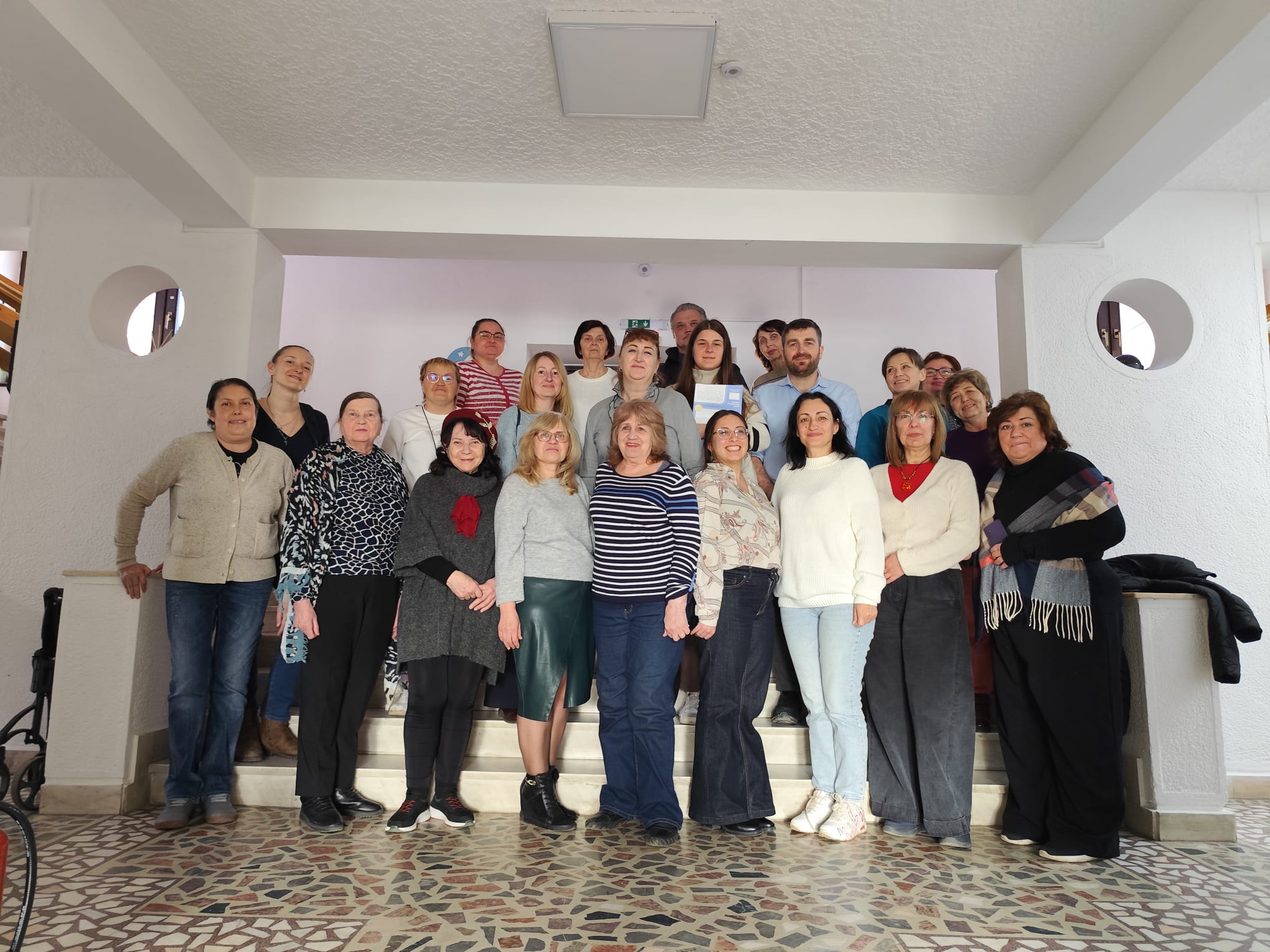
In May 2019, the partners of the Migrants take Care project met in Germany, in the city of Siegburg, where they had the opportunity to exchange knowledge on the situation of Care Workers with a migrant background and the difficulties they are facing in the specific sector. In this way, the partnership was able to identify the specific challenges of the target group that will be addressed throughout the lifetime of the project.
Analysing the situation in Italy, some basic data came forward regarding the National Health System and the Care Service Sector. Specifically, the National Health System foresees a range of different services for the care service sector of the elderly but the level and capacity of those services is quite low. As stated in a report published by the International Labour Organization: “Public care support for older person care principally consists of cash transfers, tax breaks and cash-benefits to persons in need and their families.
Due to the existent culture and the important role that the family has, members of the family (mainly the women) would assume the care responsibilities of dependent family members. The welfare provided by the state plays a subsidiary role in comparison to the family. The care model of “woman-in-the-family” has developed over the years to the “migrant-in-the-family” (King-Dejardin, 2019). As stated in the Routledge Handbook of the Politics of Migration in Europe, “These migrant care workers, called ‘badanti’ in Italian, often live-in with the elderly, providing them with continuous care. The ‘migrant in the family’ model of care has been facilitated by work permits and immigrant regularisations which have provided some opportunities for non-EU nationals to obtain a legal status as privately employed care workers” (van Hooren et al, 2019).
As stated in the paper Promoting Integration for Migrant Domestic Workers in Italy, “salaried caregivers – called badanti – often employed as live-in, are nowadays the backbone of the eldercare system in Italy, in a welfare mix that combines the help provided by relatives with the few opportunities offered by public and private care services at local level” (Castagnone et al, 2013). Most of these workers are migrant people without previous professional experiences in this sector and without regular residence permits. However, their services are considered essential for the Italian families.
Similar realities can be found between Spain (especially in the Basque Country) and Greece, whereas the situation in Germany and the UK (especially in Northern Ireland) seems to be different. In the Southern European countries it is more common for the migrant care workers to be directly employed by the families so, work in domestic care. At the same time, there is often less strict regulations and less (governmental) oversight on whether the rules are followed in the workplace, in comparison to the Northern European countries.
The situation described signifies the importance of training the caregivers so that the services that they provide can be sufficient while at the same time they can avoid exploitation and illegality. The Training Toolkit for migrants in the home and residential care service sector is already in the development phase and it expected to be ready by the end of 2019 for further validation and translation.
At the same time, the partners have started to work on the Handbook for institutions and care service providers that will support people with a migrant background to be recruited in these structures and strengthen their inclusion process.
About the project
Migrants Take Care is co-funded by the Erasmus+ Programme, Key Action 2: Strategic Partnership for adult education.
Partners
The project involves 6 partner organisations from 5 different countries:
- Coordinator:Zubigune Fundazioa (Spain)
- Belfast Metropolitan College (UK)
- CESIE (Italy)
- VESBE e.V (Germany)
- European Institute for Local development (Greece)
- Europe for Diversity Culture and Coexistence (Greece)
For further information
Read more about the project.
Contact Georgia Chondrou: georgia.chondrou@cesie.org.