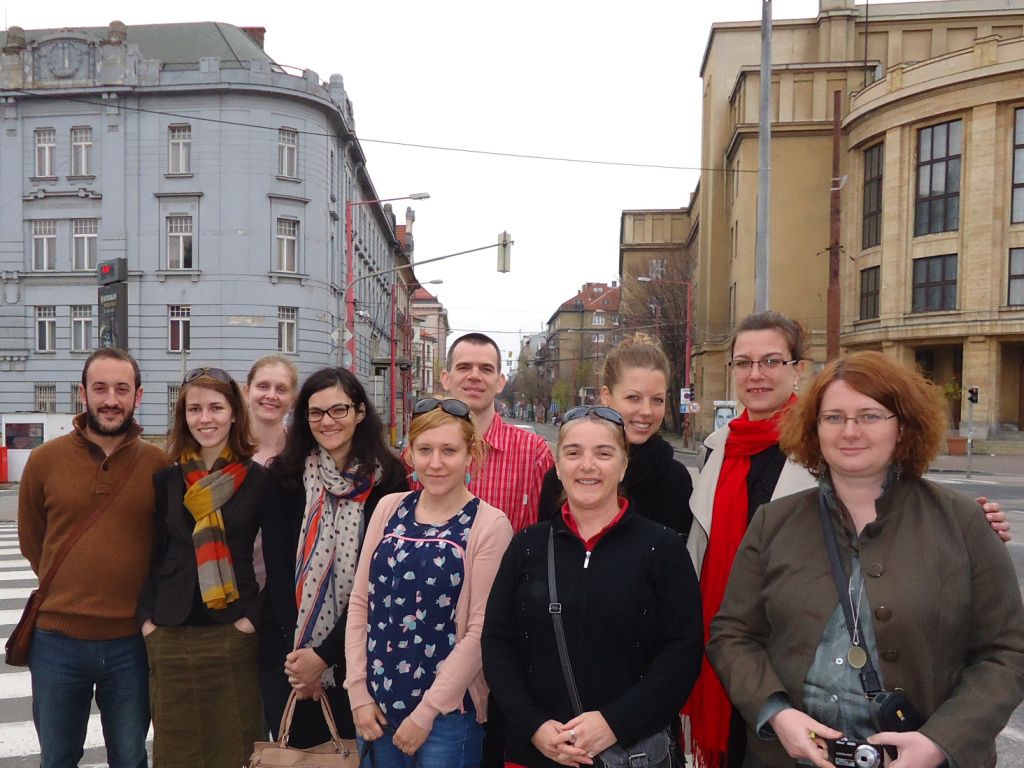
 The second encounter of the project “ProLang (Promotion of less used European Languages to youth on the move)” has taken place in Bratislava (Slovakia) the 18th and 19th April 2013. After a phase of analysis and identification of good practices for promotion among institutions providing language courses, partners were meeting to arrive to conclusions, take decisions for the next steps of the project and start testing the on-line platform that the project foresees to create. This tool is intended to be innovative, attract test-takers and be enjoyable, giving also a diagnostic about the language skills of the user. The on-line platform is available under the domain www.prolang.net and it is still under construction. It will be available from 15th of June.
During the meeting, all partners had the chance to discuss about best practices for the promotion of less spoken languages in Europe among youth. This discussion came out from the analysis of the work of different schools of language for foreigners, and other similar institutions, in more than 15 European countries. During the months of December, January, February and March, CESIE and other three partners of the project had developed a research work to contact those bodies in order to understand how to improve the next steps of the project ProLang.
In the next weeks, partners will elaborate a summary report from which start a new phase of the project from June. The objective is to valorize, compare and adapt all identified models of promotion to be used for focused promotion and dissemination through the website. The next meeting will take place in Vilnius (Lithuania) in October 2013.
“ProLang” is a two-year multilateral project financed by the Education, Audiovisual and Culture Executive Agency of the European Commission, under the frame of the Lifelong Learning Programme, transversal programme Key Activity 2, aiming to promote language learning and the linguistic diversity in Europe. Apart from CESIE, six more partner organizations participate in the project: three from different European universities specialized in language courses (Vilnius, Bratislava and Ljubljana), two Slovenian organizations with expertise in the field of ICT education and European mobility and one more from Warsaw (Poland), skilled in the visibility of online platforms.
If you belong to any organization or school provider of language courses, you would like to give any idea and/or you want further information about the project write to: jorge.carbajal@cesie.org