This booklet is a guide for people working in socio-educational animation (youth workers/educators) on the topics of sexual exploitation and abuse.


Contributes to the development of society, innovation and knowledge.

Help develop measures to counter violence and discrimination.

Supports adults in enhancing skills to promote their professional growth and participation in social and civic life.

Promotes quality and efficiency in education.

Supports and promotes educational activities, training courses and mobility projects aimed at young people.

CESIE ETS is a European center for studies and initiatives based in Palermo, Sicily.
This booklet is a guide for people working in socio-educational animation (youth workers/educators) on the topics of sexual exploitation and abuse.
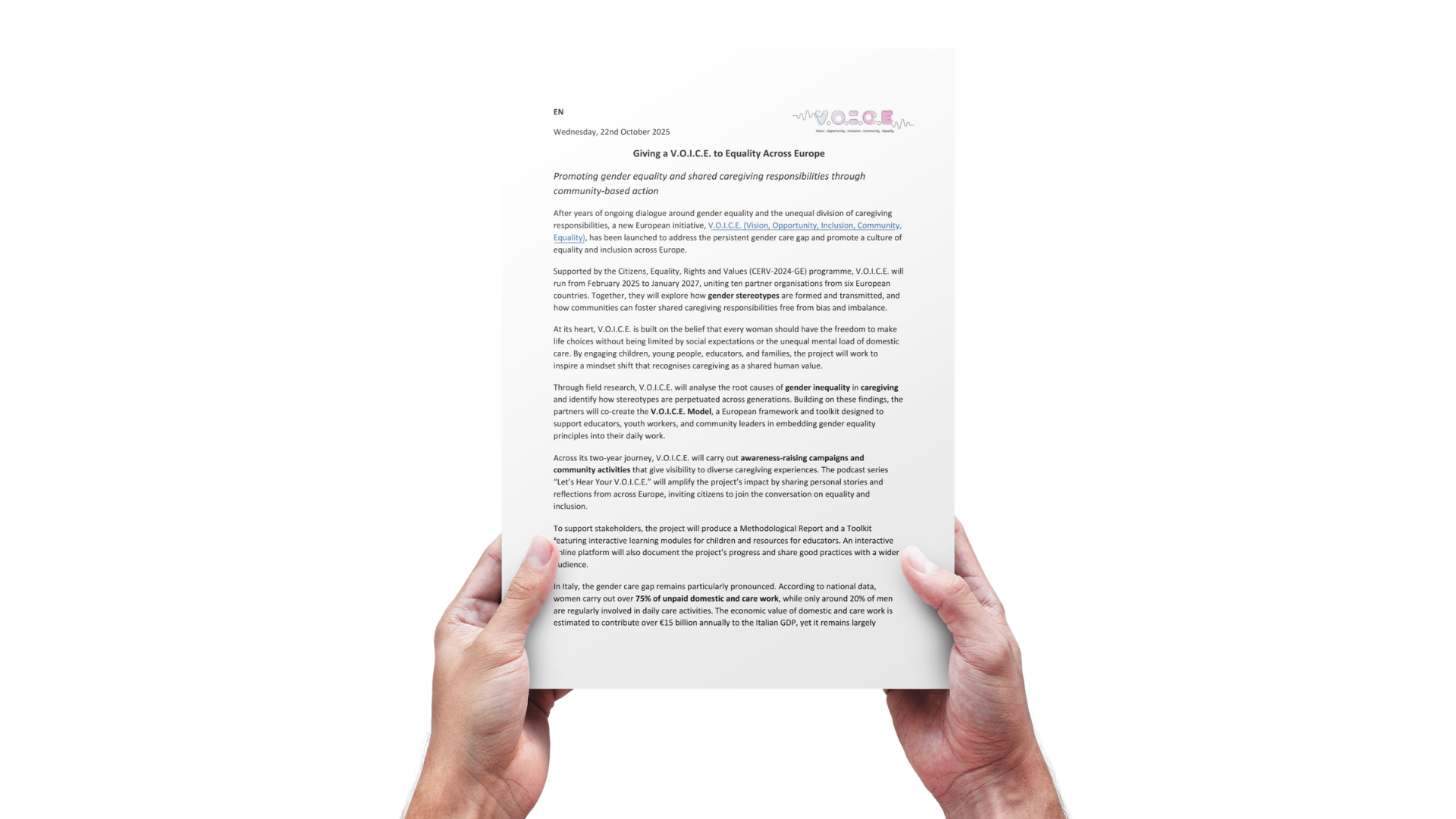
The V.O.I.C.E. project develops a transnational initiative aimed at preventing and addressing gender-based violence among young people by strengthening awareness of gender stereotypes, consent, healthy relationships, and mutual respect.
The purpose of the MEDUSA handbook is to support youth workers in recognizing, understanding, and effectively responding to online gender-based violence (OGBV).

This advocacy guide offers practical strategies to promote cooperation in child trafficking investigations, with a special focus on the role of digital evidence.
This report explores how multi-agency cooperation and public-private partnerships (PPPs) can enhance the prevention, detection, and response to human trafficking, especially in an increasingly digital environment.
This document provides practical guidance and training resources for strengthening the capacities of professionals involved in tackling human trafficking, with a focus on the use of digital evidence in criminal proceedings.
The report offers an in-depth analysis of policies and legal frameworks on human trafficking for sexual exploitation, with a specific focus on child victims.
This research delves into the multifaceted challenges and approaches to addressing human trafficking, with a special emphasis on the role of digital evidence and technological tools in the process.
This policy paper offers a set of actionable recommendations aimed at policymakers, educators, and professionals working with minors, focusing on how to prevent the sexual exploitation of children in the context of prostitution.
This document summarizes the experience of the training sessions delivered to students and VET as part of the STOP project, aimed at raising awareness on prevention of child sexual exploitation, healthy relationships and digital safety.

These national maps identify and categorise service providers and specialists operating in the health, education, social support, and mental health sectors to provide a holistic view of available supports for guardians and unaccompanied children.

The Guidelines provide relevant resources and tools for volunteer guardians on how to organise and guide listening circles. It includes information on how to organise and develop listening circles and support groups, how to encourage other guardians to share experiences and teach coping skills.

Read what’s new in GUIDE!

These category-differentiated guides-schools, social workers, local authorities, and youth workers-are structured in a practical way to address the sensitive topic of healthy relationships and potential warning signs about child sexual exploitation, offering related professionals valuable insights and tools.

JERICHO’s policy paper examines child sexual exploitation in France, Italy and Greece, providing an overview of national contexts and existing legal frameworks.