Across Europe, education systems are increasingly expected to equip new generations with the skills needed to address complex scientific, environmental, and societal challenges. International frameworks such as PISA 2025 emphasise not only scientific knowledge, but also the ability of the student community to explain phenomena, evaluate evidence critically, and make informed decisions in real-world contexts.
Early analyses conducted within ImSTEAM, however, reveal a shared challenge across Belgium, Croatia, Greece, Italy, and Slovenia. While key competences associated with STEAM education — such as critical thinking, creativity, collaboration, and problem-solving — are often present in national curricula, they are rarely supported by coherent methodological frameworks, specific assessment tools, or explicit links to international competence standards. At the same time, immersive technologies such as Virtual Reality (VR) and Augmented Reality (AR) remain underused in educational contexts, despite their potential to make learning more engaging and effective.
To help bridge these gaps, ImSTEAM brings together universities, schools, educational technology experts, and civil society organisations to explore how immersive technologies can support meaningful, inclusive, and pedagogically sound STEAM education.
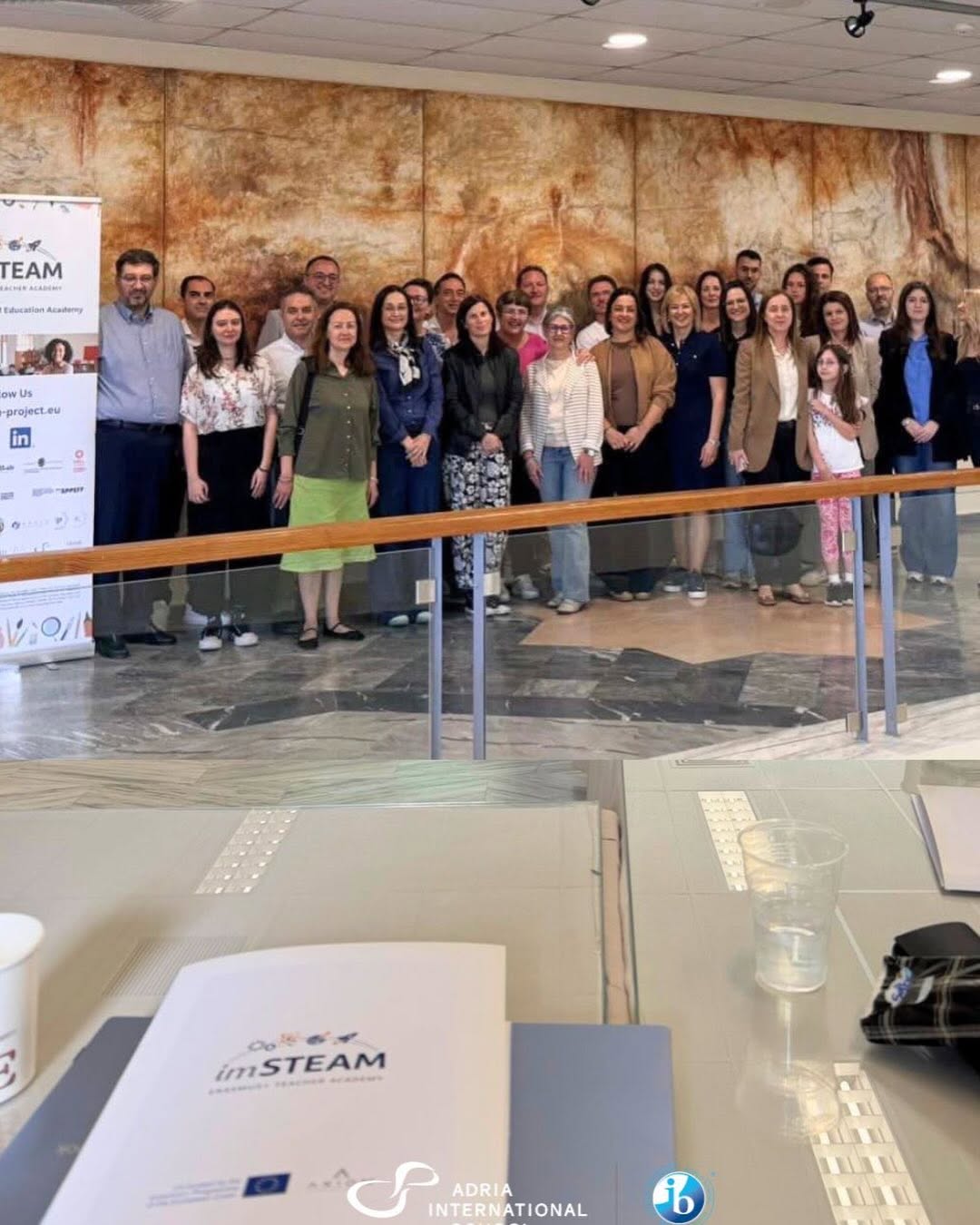
A first important step was taken in May 2026, when we took part in a co-design workshop dedicated to the development of the ImSTEAM competence framework in Patras, Greece. Rather than starting from the available technologies, those involved adopted a backward-design approach inspired by the PISA 2025 Science Framework.
The underlying idea was simple but ambitious: starting from the competences that students should develop — such as explaining scientific phenomena, analysing and evaluating scientific enquiry, and using evidence to inform decision-making — to identify the knowledge, teaching strategies, and professional competences that teaching staff need in order to foster them effectively.
Working in international and multidisciplinary teams, we analysed students’ competences and discussed how these are currently developed across different education systems. This process made it possible to reflect critically on the role of immersive technologies, identifying both the areas where they can add real value and those where their use is less meaningful. One guiding principle emerged clearly: technology should serve pedagogy, not the other way around.
While many education systems promote transversal competences such as critical thinking, creativity, collaboration, and problem-solving, teaching staff still have few concrete tools, structured methodologies, and operational guidance to develop them intentionally through STEAM pathways. ImSTEAM aims to build a shared European reference framework, capable of connecting educational objectives, teaching practices, and emerging technologies, and thereby contributing to preparing students for the challenges of the future.
About ImSTEAM
ImSTEAM – Immersive STEAM for Teacher Education and Inclusive Digital Transformation is funded by Erasmus+ Teacher Academy programme.
Partners
- PANEPISTIMIO PATRON – UNIVERSITY OF PATRAS (Grecia, coordinatore)
- RESEARCH INNOVATION AND DEVELOPMENT LAB PRIVAT – ReadLab P.C. (Grecia)
- ACADEMY OF ATHENS – AA (Grecia)
- Experimental junior high school of patras – EJHSP (Grecia)
- UC LIMBURG (Belgio)
- KATHOLIEK SECUNDAIR ONDERWIJS MAASEIK-KINROOI (Belgio)
- Schoolmakers C.V. (Belgio)
- UNIVERSITA DEGLI STUDI DI PALERMO (Italia)
- EUROSOFIA (Italia)
- I.C. Cassarà-Guida (Italia)
- CESIE ENTE DEL TERZO SETTORE (Italia)
- UNIVERZA NA PRIMORSKEM UNIVERSITA DEL LITORALE – UP (Slovenia)
- Osnovna sola Solkan – OS Solkan (Slovenia)
- Zavod VseUk (Slovenia)
- SVEUCILISTE U RIJECI – UNIRI (Croazia)
- MEDUNARODNA SREDNJA SKOLA ADRIA – ADRIA INTERNATIONAL SECONDARY SCHOOL (Croazia)
- USTANOVA ZA OBRAZOVANJE ODRASLIH DANTE – Adult Education Institute DANTE (Croazia)
- Directorate of Secondary Education of Achaia Prefecture (Grecia)
For further information
Read more about the project or contact luciano.cortese@cesie.org.