Is sport truly a welcoming and safe space for everyone? If you have never asked yourself this question, you may be overlooking something important.
Sport is widely recognised as a powerful social and cultural phenomenon that can promote inclusion, teamwork, respect, and personal development. It has the potential to bring people together across social, cultural, and economic differences, fostering values such as solidarity, equality, and mutual understanding. However, despite its positive role, sport can also reproduce and reinforce existing inequalities and discriminatory practices present in society.
In particular, sports environments often perpetuate negative norms and behaviours related to gender and SOGIESC (Sexual Orientation, Gender Identity, Gender Expression, and Sex Characteristics). Discrimination based on these factors remains widespread, undermining the integrity of sport and, in many cases, leading to abuse, harassment, and violence. Sports culture has historically been shaped by hegemonic masculinities and traditional male-centred ideologies, imposing rigid gender roles and heteronormative expectations.
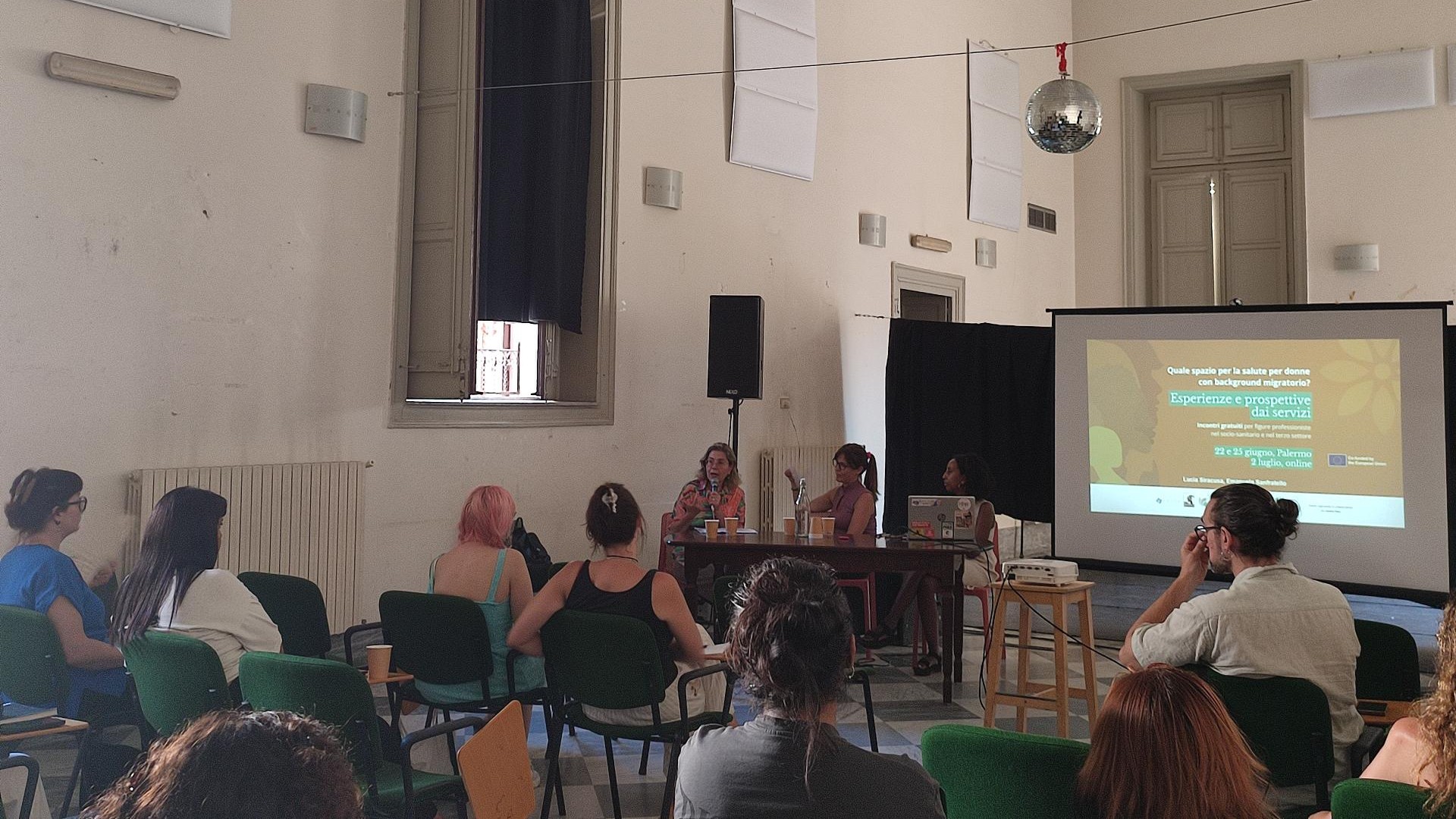
The SISTERS project aims to respond to this challenge by advancing equity through an intersectional approach. As part of the project, a training course took place on 23 and 30 April at the Department of Psychological, Pedagogical, Physical Exercise and Education Sciences at the University of Palermo, with 40 young athletes, future coaches and sports professionals.
The training, structured into 2 face-to-face sessions of circa 3 hours, combined theoretical insights with practical tools, interactive activities, and real-life scenarios to foster inclusive and equitable sports environments. These sessions addressed key topics such as gender, intersectionality, stereotypes and inclusive communication, while developing practical skills to recognise and combat discrimination in everyday practice.
The training was based on the Sports Bag, a toolkit of resources and activities that supports organisations in promoting inclusive governance in sport.
Another edition of the training is coming!
On 13 and 19 June, join us at DiAria and take meaningful action toward creating safer, more inclusive sports environments for everyone!
About the project
SISTERS is funded by the European Education and Culture Executive Agency (EACEA), under the Erasmus Sport programme, a project aiming to promote women’s and the LGBTQIA+ community’s full inclusion in sports by advancing equity through an intersectional approach.
Partners
- CESIE ETS (Italy, coordinator)
- Associaciao de Futbol do Porto (Portugal)
- Champions Factory (Bulgaria)
- Symplexis (Greece)
- CSI Center for Social Innovation LTD (Cyprus)
- SARAJEVO SUSRET KULTURA – SMOC (Bosnia-Herzegovina)
For more information
Read the project factsheet, visit the website and follow us on Facebook and Instagram.
For more information, contact Nuria Casablanca: nuria.casablanca@cesie.org