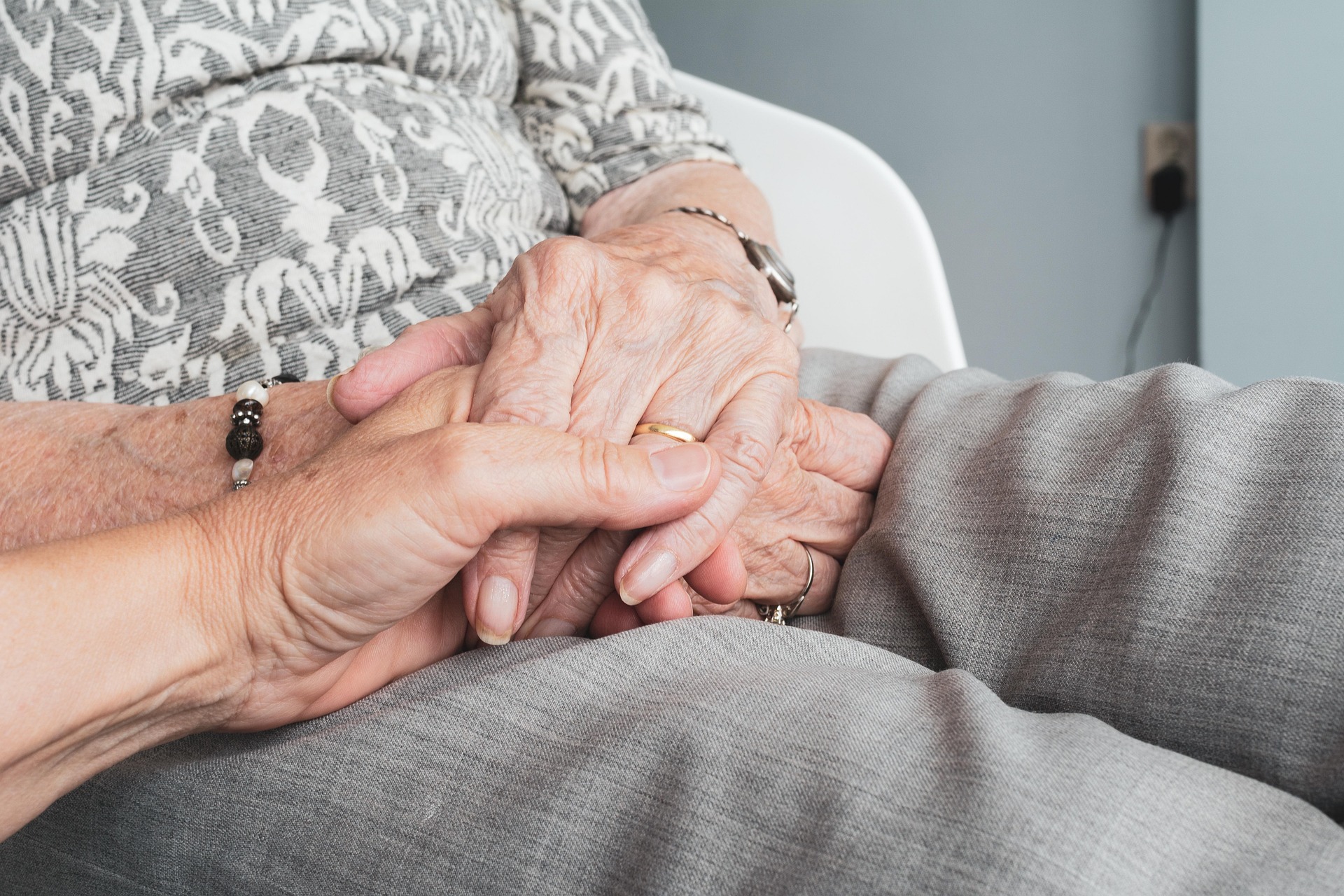
Health and wellbeing do not depend solely on clinical factors, but also on housing conditions, administrative status, the presence of support networks, and levels of trust in services. For women with a migrant background, these elements intertwine according to an intersectional logic, in which gender, migration status, and socioeconomic position interact to shape possibilities in terms of health and access to care.
It was from this reflection that the first of a cycle of three meetings took place on 22 June at the EPYC – European Palermo Youth Centre in Palermo. There, two professionals from the Civic Hospital of Palermo, Lucia Siracusa (infectious disease physician at the UOSD Infectious Diseases for Vulnerable Populations Unit) and Emanuela Sanfratello (social worker), discussed how to build integrated social and health pathways and identify the tools and figures needed to ensure adequate healthcare provision for women with a migrant background. Some fundamental good practices for ensuring effective care were highlighted:
- timely access to care without the need for an appointment or medical prescription for those who need it,
- the daily presence of an intercultural mediation service,
- the possibility of accessing free screening for sexually transmitted infections.
Alongside the measures adopted within individual healthcare facilities, the discussion highlighted the central importance of an integrated territorial network capable of recognising and responding to the specific needs of women with a migrant background, promoting their overall wellbeing beyond the purely clinical dimension. In this respect, it became critical to strengthen collaboration between health services and other local actors, fostering effective communication and shared care pathways with services able to adopt approaches sensitive to both gender and migration experience.
While acknowledging the existence of a territorial network already in communication, made up of various third-sector organisations, non-governmental organisations, social help desks, and family counselling centres, the need was highlighted to make referral procedures towards social support services systematic across all healthcare facilities. Such procedures should make it possible to direct women with a migrant background towards resources suited to their needs, ensuring coordinated interventions capable of integrating both a gender and a migration perspective.
The second meeting focused on such topics, recognising and preventing gender-based violence and how the territorial network functions, discussing the role of Anti-Violence Centres (CAV), family counselling centres, and other health and social services in preventing gender-based violence. Dr Azzurra Tramonti of the CAV Lia Pipitone, run by the Millecolori ETS Association, presented the work carried out by Anti-Violence Centres and gave an overview of the intake process, the tools used, and the composition of the multidisciplinary team, as well as of the pathways out of violence or ongoing support over time. Through the contribution of two linguistic-cultural mediators (Dr Zineb Cheikh and Dr Francesca Tilotta), the encounter also explored the role that mediators play in bringing cases of gender-based violence to light.
In healthcare, mediation was described as a key tool for building trust between health professionals and women with a migrant background, for detecting hidden episodes of gender-based violence, and for countering cases of medical violence committed against them. It was also stressed that the absence of mediation staff is itself a risk factor for care: without adequate linguistic-cultural mediation, there is a greater likelihood that episodes of violence will remain hidden, that clinical information will not be adequately communicated, and that a gap of trust will form between the woman and the health service. In this context, it is necessary to reflect on the need for the presence and training of mediators trained on gender-based violence issues, in order to ensure that care is genuinely based on informed consent and respect for women’s self-determination.
The cycle of meetings concluded on 2 July with an online session dedicated to ethnopsychology, linguistic-cultural mediation, and self-care tools for those working in this field, led by psychotherapist Maria Chiara Monti. In addition to reaffirming the importance of a transcultural approach in support pathways, the meeting addressed the relationship between professionals and the women with a migrant background they support, sharing the need to build care pathways that also protect those who carry them out, learning to recognise signs of fatigue and excessive emotional involvement that can arise in this line of work.
The three meetings showed that access to health, protection from gender-based violence, and intercultural mediation today rely mainly on the commitment of individual services and professionals, rather than on systematic procedures shared across the whole territory. Making referral between health and social services structural, investing in the presence of linguistic-cultural mediation, and in specific training on gender-based violence should instead become systematic procedures applicable by local health facilities and social services, in order to promote relationships of trust, continuity, and self-determination.
About the project
SIS-Hubs – Sorority, Integration and Support for women and girls through community-based Programmes is a project funded by funded by AMIF programme of the European Union (AMIF-2024-TF2-AG-THB, DIRECTORATE-GENERAL FOR MIGRATION AND HOME AFFAIRS).
Partners
- CESIE ETS (Italy)
- CENTRO PENC. ANTROPOLOGIA E PSICOLOGIA GEOCLINICA ETS (Italy)
- ZRS KOPER ZNANSTVENO-RAZISKOVALNO SREDISCE KOPER (Slovenia)
- KMOP KENTRO MERIMNAS OIKOGENEIAS KAI PAIDIOU (Greece)
- AAF ANIMUS ASSOCIATION FOUNDATION (Bulgaria)
- SOLWODI DEUTSCHLAND EV (Germany)
For further information
Read more about SIS-Hubs, visit socialhut.eu and follow us on Instagram.
Contact Georgia Chondrou: georgia.chondrou@cesie.org.