How can we develop effective policies to prevent gender-based violence (GBV), starting from an understanding of the needs of local communities? This is the question behind the first Technical Roundtable organised within the framework of the Bottom-Up Talks project, marking the beginning of a process of dialogue through which institutions, schools, services and third-sector organisations will work together to develop shared recommendations for the city of Palermo.
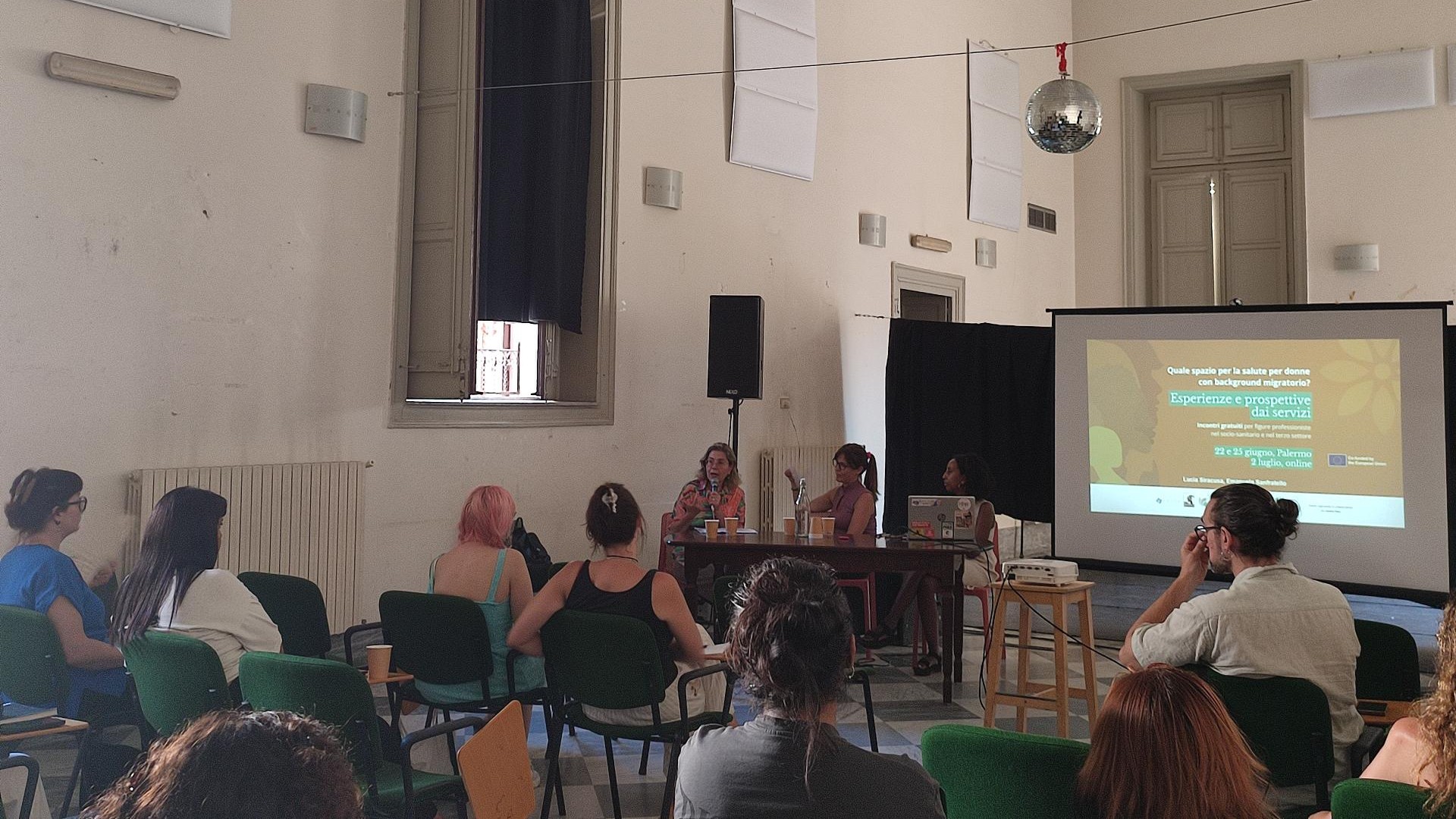
On 23 June, the first Technical Roundtable on prevention of GBV and support networks took place at the Department for Social and Health Policies of the Municipality of Palermo. The meeting focused on preventing violence in adolescent relationships and promoting mental wellbeing in schools.
Hosted and promoted by the Department, the meeting brought together 24 participants, including representatives of educational institutions, third-sector organisations, members of the Sex-Ed Council, professionals from COIRAG ETS involved in school-based Listening Services, and other local organisations. The meeting opened with institutional remarks from the Department, which confirmed the administration’s interest in supporting a stable and participatory process of dialogue.
During the meeting, the results of activities carried out within the Bottom-Up Talks project were presented, particularly the experience of the listening services established in schools and the main needs identified among adolescents, families and educational communities. Shared priorities included the need to create safe spaces where young people can be heard, strengthen mental wellbeing, promote sexuality and relationships education, address gender stereotypes, bullying and homo-lesbo-transphobia, and support the training of teachers and families.
A particularly significant contribution came from the representative of the Youth Advisory Board (YAB), who brought the perspective of young people to the discussion, highlighting the importance of having accessible spaces where they can freely discuss mental wellbeing and relationships. The discussion also highlighted the gap between the growing awareness among adolescents and the continuing difficulty, in some educational contexts, of providing genuinely competent and non-judgemental support.
The discussion also addressed a number of institutional challenges. The need to strengthen coordination between the Municipality, the local health authority (ASP), family counselling centres, schools and local services emerged as a key priority, alongside the need to improve access to psychological support pathways and strengthen the role of networks already active in the area. Several contributions also highlighted the importance of involving the relevant municipal departments, school authorities and parents’ representatives more actively, so that prevention can become a shared responsibility.
One of the most widely discussed topics concerned the new regulatory framework introduced by the so-called Valditara Law, which establishes new conditions for the delivery of sexuality and relationships education programmes in schools. Participants reflected on the implications of this legislation, reaffirming the value of schools as democratic spaces for personal development, participation and the protection of rights, while emphasising the need to ensure appropriate educational tools to address wellbeing, violence prevention and the development of healthy relationships.
The concluding session, based on a participatory collection of proposals, made it possible to identify a number of priorities for the future: strengthening cooperation between institutions and third-sector organisations, promoting continuous sexuality and relationships education programmes, enhancing school-based listening services, actively involving teachers, families and young people, and developing new training approaches based on dialogue and the exchange of experiences.
This first meeting marks the beginning of a process that will continue over the coming months through new meetings promoted in collaboration with the Municipality of Palermo. The ideas, proposals and experiences shared will contribute to the development of local policy recommendations, with the aim of building an increasingly integrated system capable of promoting mental wellbeing, supporting youth participation and preventing gender-based violence through coordinated networking and collaboration.
About BOTTOM-UP TALKS
BOTTOM-UP TALKS – Preventing teen-dating and school-related gender-based violence and promoting psychological well-being from the bottom-up is funded by CERV-2024-DAPHNE programme.
Partners
- CESIE ETS (Italy, Coordinator)
- C.O.I.R.A.G. ETS – Confederazione di Organizzazioni Italiane per la Ricerca Analitica sui Gruppi (Italy)
- KMOP – Kentro Merimnas Oikogeneias Kai Paidiou (Greece)
- CSI – Center for Social Innovation (Cyprus)
- House of Diversity Education (Lithuania)
- FEA – Femmes Entraide et Autonomie (France)
For further information
Read more on the project fact sheet, visit www.thegendertalk.eu, follow us on Facebook and Instagram.
Contact Ruta Grigaliunaite: ruta.grigaliunaite@cesie.org.