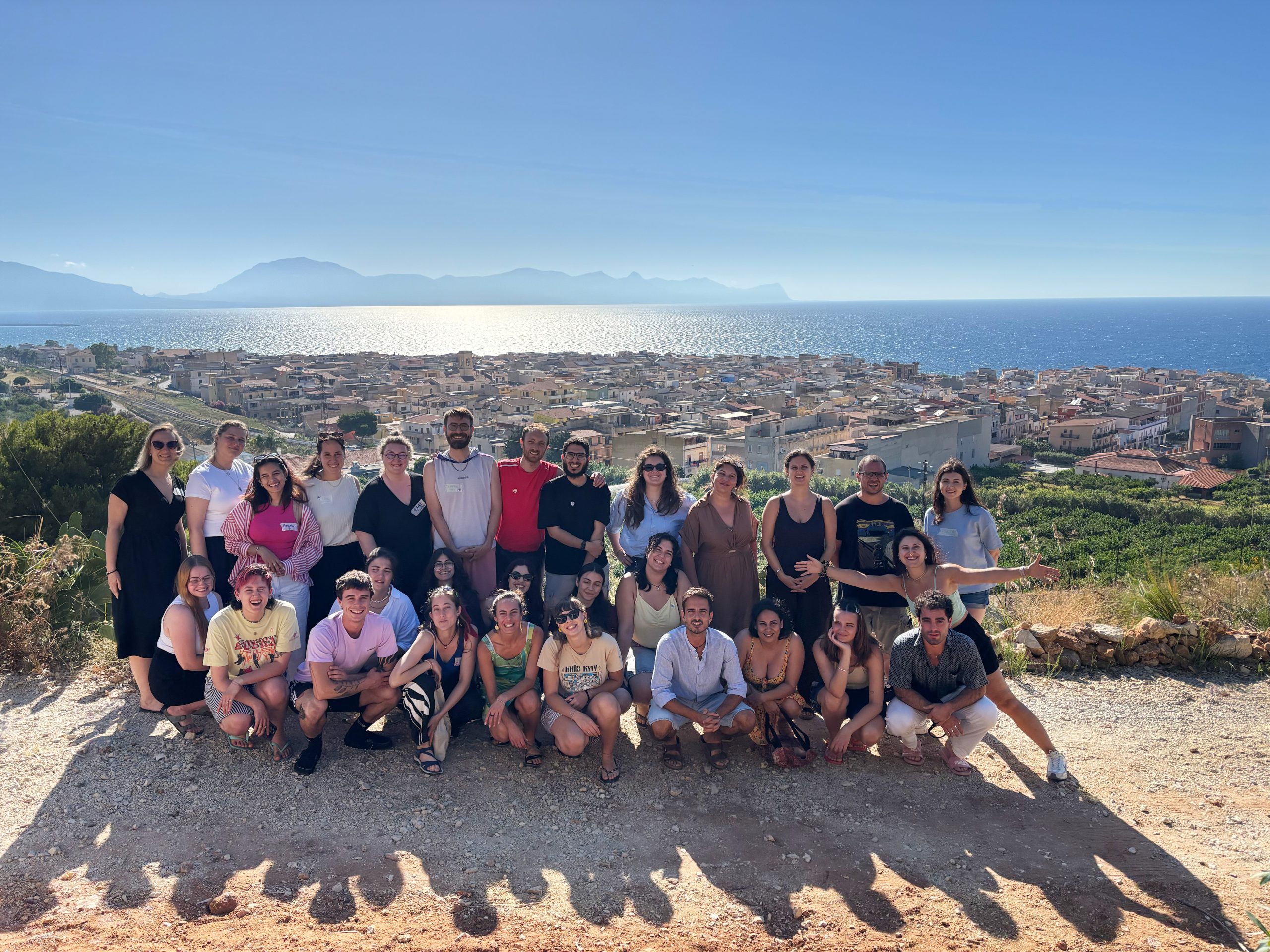
The journey began with an introductory activity that helped everyone get to know each other and create a positive, collaborative atmosphere. Through a team-building game, participants discovered how communication and teamwork are essential—not only in group activities but also in addressing complex social issues.
One of the first topics explored was the history of migration. This gave students the opportunity to understand migration as an age-old, structural phenomenon influenced by economic, political, environmental, and cultural factors. The activities encouraged critical thinking and highlighted the parallels between past and present migration experiences.
Next, we looked into the systems of reception and asylum, not just from a theoretical point of view but also through a legal lens. We discussed Italian and European laws on asylum and reception, examining both the strengths and challenges of current systems. A particularly powerful moment was the activity called “La Talea”—a metaphor for the potential to grow new roots in a welcoming place, provided that people are supported throughout their journey.
We also focused on the key role of the third sector, which works alongside public institutions to offer migrants support, services, and real opportunities for integration. The importance of local solidarity networks became very clear—networks that build bridges between people and help create social cohesion.
One of the most engaging sessions was dedicated to the Right 2Be movement, which promotes legal and civil rights for migrants. The activity “Can I come in?” simulated the challenges of accessing basic rights, revealing the visible and invisible barriers that many people face when trying to build a new life in a new country.
Another deeply moving moment was the testimony of a cultural mediator and rescue worker from Médecins Sans Frontières (Doctors Without Borders). She shared her experiences in the Mediterranean Sea during rescue missions, offering a powerful and emotional insight into the often tragic realities of migration journeys. Her stories highlighted the courage and resilience of those risking everything for a better future.
Throughout the project, we also explored the power of storytelling as a tool to share alternative narratives. Through workshops and creative activities, participants reflected on how personal stories—when shared—can break down stereotypes and restore the humanity and dignity of people who are too often reduced to numbers or headlines.
The final meeting was dedicated to Moltivolti, a community organization based in Palermo that promotes social inclusion through shared workspaces and intercultural collaboration. It was also a chance to discuss migration policies related to labor, with a special focus on the rights of migrant workers as outlined in Article 19 of the UN Declaration on the Rights of Migrant Workers.
The PIVOT journey turned out to be a dynamic space for dialogue, awareness, and collective growth. Through hands-on methods, direct experiences, and shared reflections, we created an environment where words like hospitality, rights, and dignity became real and meaningful. It was an experience that left a lasting impact, encouraging a deeper, more empathetic way of seeing the world and one another.
About the project
PIVOT – Youth Promoting Informed VOTe is a project funded by the KA220-YOU – Cooperation partnerships in youth program of the European Union.
Partners
- FEMMES ENTRAIDE ET AUTONOMIE (France, coordinator);
- CESIE (Italy);
- People in Focus (Albania);
- SAVE A GIRL SAVE A GENERATION (Spain)
For further information
Read more about the project.
Contact Bario Badagliacca: mario.badagliacca@cesie.org.